

We interviewed a young man we will call "John" who described his Thanksgiving -- intense loneliness sitting on a Manhattan rooftop trying to avoid the snow falling outside, listening to the voices in the apartments celebrating. It wasn't his hunger or longing for a warm bed that he focused on, but his loneliness.
While we know that homeless people need shelter and food, we don't often think about the high toll of loneliness. Avoiding contact is part of a complex set of strategies people use to survive. But long-term, isolation breeds hopelessness, leading to a downward spiral that makes it hard to take action, to find housing, work, and reconnect.
Perhaps because the holiday season is rich with hope for most of us, it's hard to want to think too much about homelessness because it makes us feel helpless and hopeless.
Yet people are homeless in large numbers because we as citizens tolerate it. If we in the U.S. - you and I -- decided that homelessness was unacceptable, we would no longer have widespread homelessness.
Although we had rates of poverty in the early to mid-1960's for example from 14 to 22 percent, compared to 13 to 15 percent in the 1980s, in the earlier period we did not see nearly the same numbers of people living in our streets that we do today. What changed?
1. Housing prices increased faster than inflation, and we tore down a lot of cheap housing as we undertook 'urban renewal.' Federal housing expenditures overall tilt toward higher income homeowners through the mortgage interest deduction, with significant gaps between the need for subsidies that can make rental housing affordable to people with low incomes, and the level of subsidies available.
2. While the move toward deinstitutionalizing people with mental illness in the 1970's was a positive one, unfortunately states did not invest sufficient resources in developing alternative community based resources, and as the availability of mental health services decreased in relation to the need, increasing numbers became homeless.
3. Veterans who were discharged at the end of the Vietnam War hit a wall after coming home to inadequate programs that could help with post-war health, mental health and addiction issues, including connections to housing and civilian jobs.
4. AIDS hit the U.S. like a bombshell, with formerly middle class men in the initial wave becoming very ill very quickly, causing them to lose their jobs and become homeless.
5. The crack cocaine epidemic exploded. As a result of addiction people lost jobs or entered a revolving door of incarceration and homelessness.
Now, decades later, just under 600,000 men, women, youth, children are homeless daily - well over a million each year. And with new veterans coming home from the war, and the housing market heating up, the levels of homelessness remain high.
What is to be done? In the early 2000's the federal government, prodded by theNational Alliance to End Homelessness among other advocates called for communities to develop plans not just to manage, but to end homelessness. Many local governments heeded the call. Data from many studies showed that supportive housing (low cost permanent housing with built in support services) cost little more than leaving people bouncing through shelters, jails, and emergency rooms. As a result, our country set an audacious goal to create more than 100,000 apartments for chronically homeless people, which we achieved - and the number of individuals experiencing chronic homelessness has declined by 25% since 2007. More recently we have set and arestarting to achieve goals to decrease veterans' homelessness. Places where we might not expect significant progress - like Utah - are getting the job done by focusing on solutions.
One approach to addressing this problem is 'rapid re-housing' -- getting people rehoused as fast as possible after they become homeless. And holding other systems accountable so that they don't discharge people into homelessness -- notably healthcare and incarceration.
Work also plays a huge role. John, who sat lonely on a rooftop, eventually got into supportive housing, then got a job managing an apartment building. By chance we had a photo of John in the streets when he was homeless - big beard, unkempt clothes. But when we did our interview, he was housed and working, in a suit and tie, happy, healthy, and motivated.
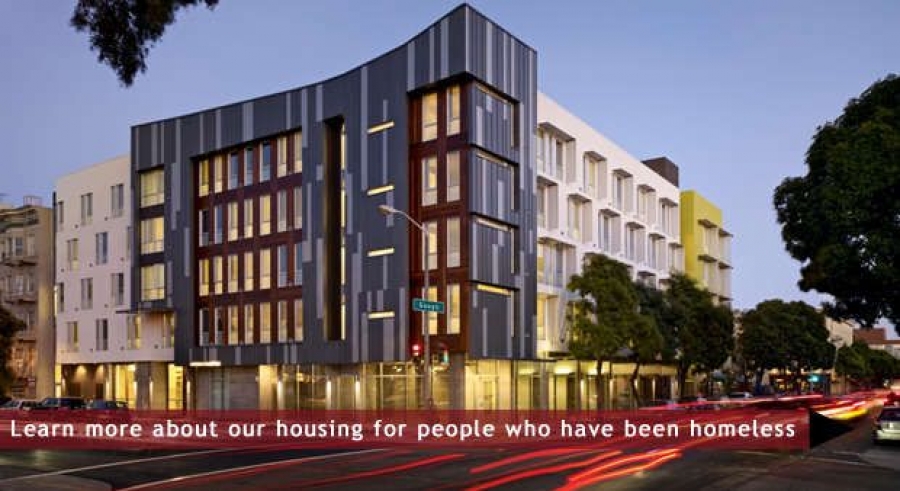
Organizations like Community Housing Partnership, Chrysalis and Weingart Center for the Homeless - run social enterprise businesses, which provide first-step employment to people exiting homelessness. The employees can get the experience and training they need to move on, and regain hope so that they can reconnect to society.
Awareness is the first step, but we also need action. It is time to stop tolerating widespread homelessness.
Link to original article from The Huffington Post
 Imagine going to the polls on Election Day and discovering that your ballot could be collected and reviewed by the
 ACLU Blueprints Offer Vision to Cut US Incarceration Rate in Half by Prioritizing 'People Over Prisons'
  "These disasters drag into the light exactly who is already being thrown away," notes Naomi Klein
  How about some good news? Kansas Democratic Representative advances bill for Native Peoples.
  What mattered was that he showed up — that he put himself in front of the people whose opinions on
 On a night of Democratic victories, one of the most significant wins came in Virginia, where the party held onto
 A seismic political battle that could send shockwaves all the way to the White House was launched last week in
 In an interview with Reuters conducted a month after he took office, Donald Trump asserted that the U.S. had “fallen
 Attorney General Jeff Sessions overturned the sweeping criminal charging policy of former attorney general Eric H. Holder Jr. and directed