
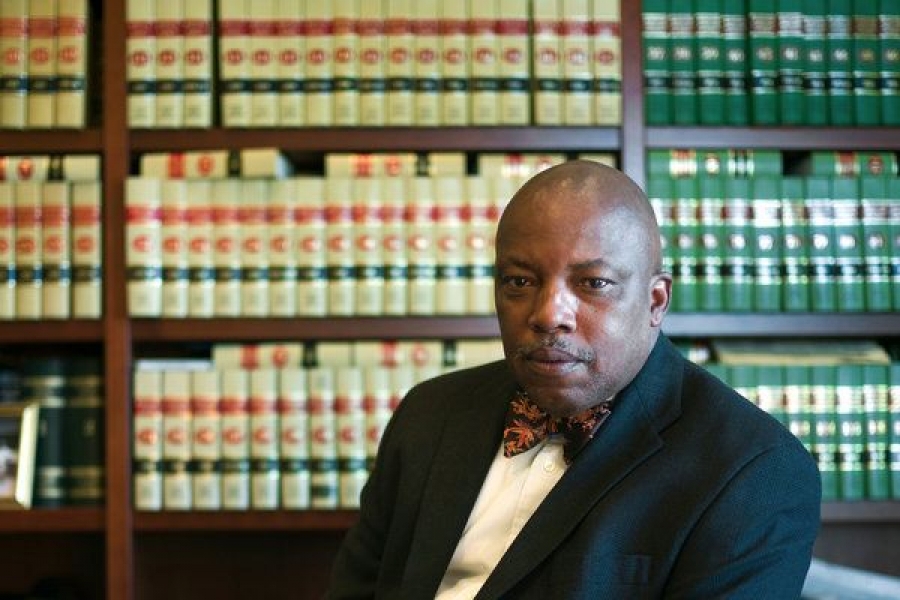
“Who’s in court with you today?” he demanded of Tanika, the 16-year-old standing before him in handcuffs.
“My mom,” she said.
“I know that,” Judge Dawson snapped.
An honors student, Tanika had never been in trouble with the law before. But for the past year, ever since she was involved in a fight with another girl at her high school, Judge Dawson had ruled her life, turning it into a series of court hearings, months spent on house arrest and weeks locked up at a juvenile detention center in Laurel, Md.
Most recently, he had detained her for two weeks for violating probation by visiting a friend on the way home from working off community service hours. Now he was deciding whether to release her.
“I’m hesitating because I don’t know whether you got the message,” he said.
Juvenile court judges in the United States are given wide discretion to decide what is in a young offender’s best interest. Many, like Judge Dawson, turn to incarceration, hoping it will teach disobedient teenagers a lesson and deter them from further transgressions.
But evidence has mounted in recent years that locking up juveniles, especially those who pose no risk to public safety, does more harm than good. Most juvenile offenders outgrow delinquent behavior, studies find. And incarceration — the most costly alternative for taxpayers — appears to do little to prevent recidivism and often has the opposite effect, driving juveniles deeper into criminal behavior.
“Once kids get in the system, they tend to come back, and the farther they go, the more likely they are to keep going,” said Edward Mulvey, a psychologist at the University of Pittsburgh School of Medicine and the author of a major study of delinquent youths.
Slowly, policy makers have begun to heed this message. After decades when states grew more punitive in their approach to juvenile crime, locking up more and more youths, more than a dozen have now revised statutes or regulations to avoid the overuse of incarceration, among them New Jersey and Indiana.
But judges are not always so quick to follow. And often the judges most resistant to change are those most determined to help troubled youths, juvenile delinquency experts say.
Read the complete article at The New York Times








 Imagine going to the polls on Election Day and discovering that your ballot could be collected and reviewed by the
 "These disasters drag into the light exactly who is already being thrown away," notes Naomi Klein
  How about some good news? Kansas Democratic Representative advances bill for Native Peoples.
  What mattered was that he showed up — that he put himself in front of the people whose opinions on
 On a night of Democratic victories, one of the most significant wins came in Virginia, where the party held onto
 A seismic political battle that could send shockwaves all the way to the White House was launched last week in
 In an interview with Reuters conducted a month after he took office, Donald Trump asserted that the U.S. had “fallen
 The New England Conference of United Methodist Churches voted this past Saturday on a resolution declaring that the Christian thing